

Curriculum and Courses
The program in microbiology includes courses in general microbiology, pathogenic (disease-related) microbiology, immunology (dealing with immunity to disease), microbial ecology (environmentally related microbiology), virology, genetics (including recombinant DNA technology), microbial physiology, bioinformatics, chemistry, mathematics, and physics. Laboratories are an essential part of the science courses.
Combined Microbiology B.S./M.S. Degree Program
The combined bachelor’s–master’s program lets highly qualified students pursue both the Microbiology, B.S. and the Microbiology M.S. degrees concurrently. Students interested in this option should consult the program’s graduate director early, as it requires advance planning.
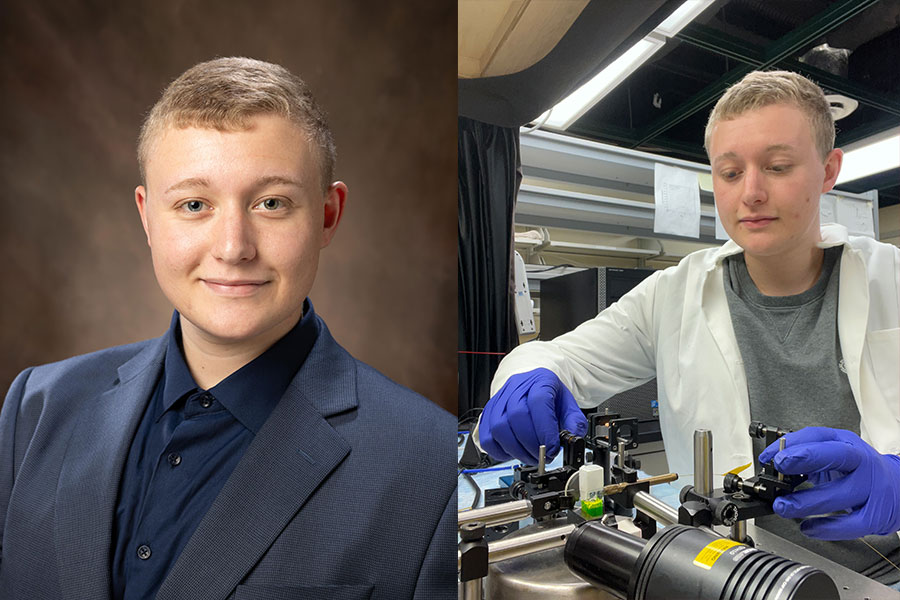
I never knew that research was an option for undergraduates, until I found out about the high level of undergraduate students involved in some form of undergraduate research program at Miami.
Research Opportunities
Microbiology faculty are conducting research on microbial pathogenesis, environmental microbiology, molecular microbiology, and more. Both undergraduate and graduate students may get involved in laboratory research as well, including within Miami’s research facilities:
Careers in Microbiology
Students receiving degrees in Microbiology, Medical Laboratory Science, or Public Health are well-prepared for careers in almost any field in medicine and biology, and in every sector of the economy: universities and colleges, schools, hospitals, government agencies, Congress, industry, business, and communications.
These degrees also serve as an excellent stepping stone to medical school and align well with the Premedical Studies co-major.
Career Paths include:
- Infectious Disease
- Technical Sales
- Medical Illustration
- Genetic Engineering
- Scientific Research
- Clinical Microbiology
- Drug Development
- Patent Law
- Bioremediation
- Education
- Public health
- Pollution control
- Immunology
- Quality Control
- Food Technology
- Molecular Biology
- Vaccine Development
- Environmental Health
- Technical Writing
- Bioweapons Defense
Career Options
A major in microbiology prepares students for a career in almost any field in medicine and biology. Microbiologists work in every sector of the economy: universities, hospitals, government agencies, industry, the Peace Corps, and NASA. Our recent graduates report job titles of staff microbiologist, lab technician, research assistant, and technical sales representative.
Clinical Research Coordinators
Plan, direct, or coordinate clinical research projects. Direct the activities of workers engaged in clinical research projects to ensure compliance with protocols and overall clinical objectives. May evaluate and analyze clinical data.
View Career DetailsEnvironmental Compliance Inspectors
Inspect and investigate sources of pollution to protect the public and environment and ensure conformance with Federal, State, and local regulations and ordinances.
View Career DetailsBioengineers and Biomedical Engineers
Apply knowledge of engineering, biology, chemistry, computer science, and biomechanical principles to the design, development, and evaluation of biological, agricultural, and health systems and products, such as artificial organs, prostheses, instrumentation, medical information systems, and health management and care delivery systems.
View Career DetailsFood Scientists and Technologists
Use chemistry, microbiology, engineering, and other sciences to study the principles underlying the processing and deterioration of foods; analyze food content to determine levels of vitamins, fat, sugar, and protein; discover new food sources; research ways to make processed foods safe, palatable, and healthful; and apply food science knowledge to determine best ways to process, package, preserve, store, and distribute food.
View Career DetailsMicrobiologists
Investigate the growth, structure, development, and other characteristics of microscopic organisms, such as bacteria, algae, or fungi. Includes medical microbiologists who study the relationship between organisms and disease or the effects of antibiotics on microorganisms.
View Career DetailsMolecular and Cellular Biologists
Research and study cellular molecules and organelles to understand cell function and organization.
View Career DetailsEpidemiologists
Investigate and describe the determinants and distribution of disease, disability, or health outcomes. May develop the means for prevention and control.
View Career DetailsMaterials Scientists
Research and study the structures and chemical properties of various natural and synthetic or composite materials, including metals, alloys, rubber, ceramics, semiconductors, polymers, and glass. Determine ways to strengthen or combine materials or develop new materials with new or specific properties for use in a variety of products and applications. Includes glass scientists, ceramic scientists, metallurgical scientists, and polymer scientists.
View Career DetailsQuality Control Analysts
Conduct tests to determine quality of raw materials, bulk intermediate and finished products. May conduct stability sample tests.
View Career DetailsHealth Education Specialists
Provide and manage health education programs that help individuals, families, and their communities maximize and maintain healthy lifestyles. Use data to identify community needs prior to planning, implementing, monitoring, and evaluating programs designed to encourage healthy lifestyles, policies, and environments. May link health systems, health providers, insurers, and patients to address individual and population health needs. May serve as resource to assist individuals, other health professionals, or the community, and may administer fiscal resources for health education programs.
View Career DetailsLawyers
Represent clients in criminal and civil litigation and other legal proceedings, draw up legal documents, or manage or advise clients on legal transactions. May specialize in a single area or may practice broadly in many areas of law.
View Career DetailsTechnical Writers
Write technical materials, such as equipment manuals, appendices, or operating and maintenance instructions. May assist in layout work.
View Career DetailsPodiatrists
Diagnose and treat diseases and deformities of the human foot.
View Career DetailsAllergists and Immunologists
Diagnose, treat, and help prevent allergic diseases and disease processes affecting the immune system.
View Career DetailsPreventive Medicine Physicians
Apply knowledge of general preventive medicine and public health issues to promote health care to groups or individuals, and aid in the prevention or reduction of risk of disease, injury, disability, or death. May practice population-based medicine or diagnose and treat patients in the context of clinical health promotion and disease prevention.
View Career DetailsMedical and Clinical Laboratory Technologists
Perform complex medical laboratory tests for diagnosis, treatment, and prevention of disease. May train or supervise staff.
View Career DetailsSales Representatives, Wholesale and Manufacturing, Technical and Scientific Products
Sell goods for wholesalers or manufacturers where technical or scientific knowledge is required in such areas as biology, engineering, chemistry, and electronics, normally obtained from at least 2 years of postsecondary education.
View Career DetailsRelated Programs
Miami students are an eclectic mix of thinkers, doers, leaders and followers, introverts and extroverts, authors, painters, climbers, coders, pianists, philanthropists, and gamers. Just to name a few.

In preparation for medical school, Rebecca conducted research, participated in a medical education club, and job-shadowed a physician through a program sponsored by Miami’s Mallory-Wilson Center for Heathcare Education.
Facts and Stats
Your college experience here will be one of the most exciting times of your life. To make sure of this, we’ll provide you with a powerful support system.
Contact Us
Undergraduate Admission
Department of Microbiology
Becky Balish, Ph.D.
Lead Departmental Advisor
Pearson Hall 60
700 E. High St.
Oxford, OH 45056