

Why Choose Miami Polytechnic’s Environmental Biology concentration?
Learn by doing in the lab, the field, and beyond.
Build practical skills through laboratory research, field experiences, and hands-on projects while learning in small classes where faculty know you by name.
Explore ecosystems, wildlife, plants, soils, and water while gaining experience with technologies like Geographic Information Systems (GIS) to analyze environmental data and solve real-world challenges. You’ll also have opportunities to complete internships, conduct undergraduate research, and earn industry-recognized certifications that prepare you for careers in conservation, sustainability, and environmental science.
As one of the new Miami University Polytechnic programs, Applied Biology combines classroom learning with real-world experience, helping you graduate career-ready.
A Look at the Applied Biology in Environmental Biology
Graduate with Industry-Recognized Certifications
Along with a comprehensive biology education, you’ll earn an OSHA 10 certification during your sophomore year and complete either the 40-hour OSHA Hazardous Waste Operations and Emergency Response (HAZWOPER) certification or an Environmental Education certification in your senior year.
Curriculum and Courses
- BIO 209 Fundamentals of Ecology
- BIO 311 Vertebrate Zoology
- BIO 351 Environmental Education
- BIO 467 Conservation Biology
Every student completes a career-focused minor or certificate that adds specialized skills to their Applied Biology degree. Choose from the list below.
- Applied Social Science Minor
- Commerce Minor
- Communication Studies Minor
- Data Intelligence Minor
- English Studies Minor
- Forensic Investigation Minor
- Geographic Information Science Certificate
- Psychological Science Minor
- Self-Designed Tool (department approval required)
Students majoring in Applied Biology may not also major in Biology or Zoology.
Students will take classes in-person at Hamilton and Middletown.
What You’ll Learn in the Environmental Biology Concentration
You’ll build the knowledge and hands-on skills to:
- Advocate for ecosystems, biodiversity, and the natural world.
- Collect and analyze environmental data in the lab and the field.
- Explore ecology, geology, environmental chemistry, and conservation science.
- Investigate wildlife, habitats, and environmental challenges using the scientific method.
- Solve real environmental problems through research and evidence-based decision-making.
- Communicate scientific findings to employers, communities, and fellow scientists.
Applied Biology Career Options
Applied Biology employers include zoos, environmental consulting firms, and agencies such as the US Fish & Wildlife Service, the Ohio Department of Natural Resources, and the Butler County MetroParks. Students are also prepared to attend graduate or professional schools.
Natural Sciences Managers
Plan, direct, or coordinate activities in such fields as life sciences, physical sciences, mathematics, statistics, and research and development in these fields.
View Career DetailsMicrobiologists
Investigate the growth, structure, development, and other characteristics of microscopic organisms, such as bacteria, algae, or fungi. Includes medical microbiologists who study the relationship between organisms and disease or the effects of antibiotics on microorganisms.
View Career DetailsZoologists and Wildlife Biologists
Study the origins, behavior, diseases, genetics, and life processes of animals and wildlife. May specialize in wildlife research and management. May collect and analyze biological data to determine the environmental effects of present and potential use of land and water habitats.
View Career DetailsPark Naturalists
Plan, develop, and conduct programs to inform public of historical, natural, and scientific features of national, state, or local park.
View Career DetailsEnvironmental Scientists and Specialists, Including Health
Conduct research or perform investigation for the purpose of identifying, abating, or eliminating sources of pollutants or hazards that affect either the environment or public health. Using knowledge of various scientific disciplines, may collect, synthesize, study, report, and recommend action based on data derived from measurements or observations of air, food, soil, water, and other sources.
View Career DetailsRecreation Workers
Conduct recreation activities with groups in public, private, or volunteer agencies or recreation facilities. Organize and promote activities, such as arts and crafts, sports, games, music, dramatics, social recreation, camping, and hobbies, taking into account the needs and interests of individual members.
View Career DetailsBuild Your Network Through Internships
Gain real-world experience through internships with conservation agencies, environmental businesses, and nonprofit environmental organizations.
Prepare for Your Future
Professional development is built into your degree.
In BSC 292: Applied Biology Sophomore Seminar, you’ll explore careers, build your resume, discover internships and research opportunities, and earn your OSHA 10 certification.
In BSC 492: Applied Biology Senior Seminar, you’ll prepare for a career or graduate school while earning a 40-hour OSHA professional certification before graduation.
Create New Knowledge
Work alongside faculty on research projects in the lab and the field. Present your findings, build your resume, and gain experience that prepares you for graduate school and careers in environmental science and conservation.
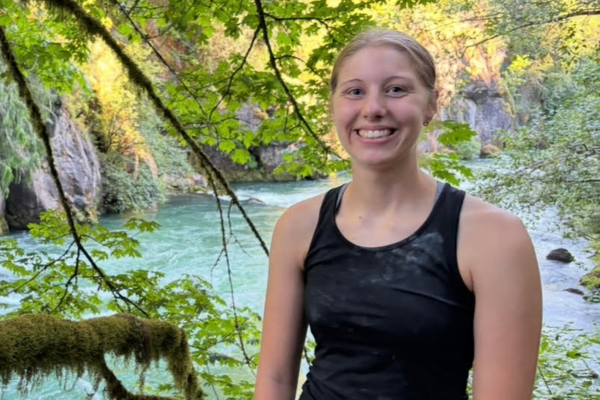
“My research experience at Miami has increased my confidence in my abilities and prepared me for graduate school.”
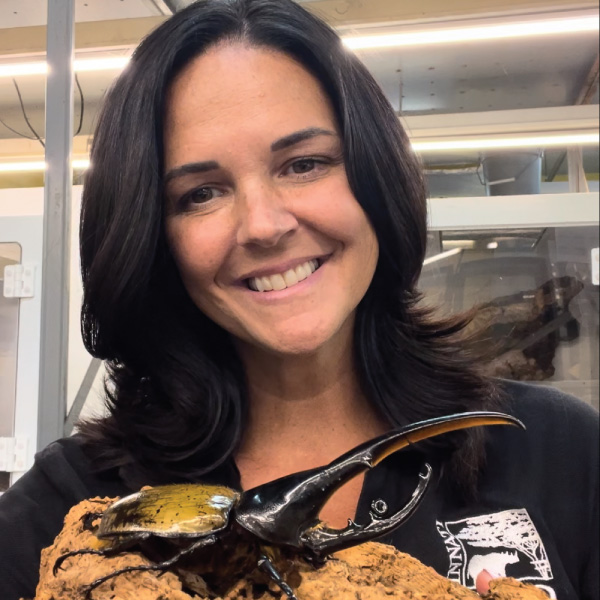
“The knowledge and skills I gained from my applied biology degree at Miami Regionals are invaluable in my role as a zookeeper, especially my background in invertebrate zoology.”
“I am building knowledge and skills, both in the specific aspects of what I want to do and also just as a person. I definitely think that the hands-on portions of different things are my favorite because that’s also when I learn best.”
Facts and Stats
Your college experience here will be one of the most exciting times of your life. To make sure of this, we’ll provide you with a powerful support system.
-
97.4%
- Post-Graduation Success Rate Among 2023-2024 Bachelor’s Degree Recipients Miami University Data
-
4%
- Projected job growth for environmental scientists through 2034 Bureau of Labor Statistics
-
8,500
- Environmental scientist job openings are projected each year nationwide Bureau of Labor Statistics
Admission and Aid
Miami University Regionals offers an education that fits your lifestyle so you can earn a degree that is life-changing. And our open admission policy allows for an environment of diverse learners.
Related Programs
Miami students are an eclectic mix of thinkers, doers, leaders and followers, introverts and extroverts, authors, painters, climbers, coders, pianists, philanthropists, and gamers. Just to name a few.
Contact Us
Undergraduate Admission
Department of Biological Sciences
Middletown Campus
Levey Hall 112
4200 N. University Bvld.
Middletown, OH45042
Hamilton Campus
Mosler Hall 548
1601 University Blvd.
Hamilton, OH 45011