

Foundational for Success: Problem Solving
Curriculum and Concentrations
The Ph.D. in Computer Science at Miami University is a research-intensive, 90-hour program designed to be completed in five years of full-time study. Each student’s journey includes a combination of advanced coursework, regular research seminars, and a dissertation that demonstrates meaningful societal impact. Students will benefit from faculty expertise in the Department of Computer Science and Software Engineering in the College of Engineering and Computing, as well as the Department of Physics in the College of Arts and Science.
Ph.D. in Computer Science students can specialize in a focus area of their choice, such as Artificial Intelligence, Quantum Computing, Cybersecurity, or Applied Physics.
Example Courses:
- CSE 533 Deep Learning
- CSE 543 High Performance Computing and Parallel Programming
- QTM 562 Advanced Quantum Computing Applications
- CSE 544 Applied Cryptography
- CSE 588 Image Processing and Computer Vision
- PSY 691 Modern Quantum Physics
Quick Facts
- 4-5 Years Expected Program Duration (full-time)
- Curriculum: Minimum 60 hours (with M.S.), or 90 hours (with B.S.) with a minimum of 18 hours of coursework and 10 hours of seminar; no written qualifying exam is required.
- Application Deadlines:
- Feb. 1 for Fall semester
- Students must write and successfully defend a dissertation in their research area as part of their degree requirements.
Facts and Stats
-
54%
- Of 2023-24 Computer Science Ph.D. recipients went on to fulfill industry (vs. traditional academic) roles Taulbee
-
26%
- Job Growth: 2023-2033 Projections for computer and information research scientists U.S. Bureau of Labor Statistics
-
No. 1
- in Ohio: Best Colleges for Future Leaders TIME
Admission Requirements
- Admission requires either a bachelor’s degree, with a minimum 3.0 GPA (4.0 GPA U.S. Scale) (or equivalent), or a master’s degree, with a minimum 3.0 GPA (4.0 GPA U.S. Scale) (or equivalent), in computer science, physics, or a closely-related field.
- The Graduate Record Exam is recommended, but not required.
- Prior coursework must include college-level Calculus 1, Calculus 2, Linear Algebra, Discrete Math, Statistics, Computer Programming (e.g., C++, Python, Java), Data Structures and Algorithms. The courses in Data Structures and Algorithms must be equivalent to Miami’s currently offered CSE 274 and CSE 374 courses that are required for admission to the Masters of Science in Computer Science program. Discipline-specific courses appropriate to the Ph.D. focus are also required.
- Students whose native language is not English must demonstrate English proficiency with a minimum score of 80 for TOEFL, 6.5 for IELTS, 54 for PTE, or 110 for Duolingo.
- These requirements are consistent with the admission requirements for other Ph.D. programs at Miami University.
- Financial Aid: Limited graduate assistantships are available. Apply early for full consideration.
Related Programs
Miami University offers a Ph.D. in Engineering as well as Master of Science degrees in a number of engineering, computer science, and physics disciplines. For students earning a master’s degree in engineering, physics, or computer science at Miami University, all graded coursework taken toward the master’s also counts toward the Ph.D. graded coursework requirement, but is not factored into the 60 hours required beyond the master’s degree.
Chemical and Biomedical Engineering, M.S.
Graduate Program
Read MoreElectrical and Computer Engineering, M.S., M.Eng.
Graduate Program
Read MoreMechanical Engineering, M.S.
Graduate Program
Read MorePhysics, M.S.
Graduate Program
Read MoreComputer Science, M.S., M.C.S
Graduate Program
Read MoreEngineering, Ph.D.
Graduate Program
Read More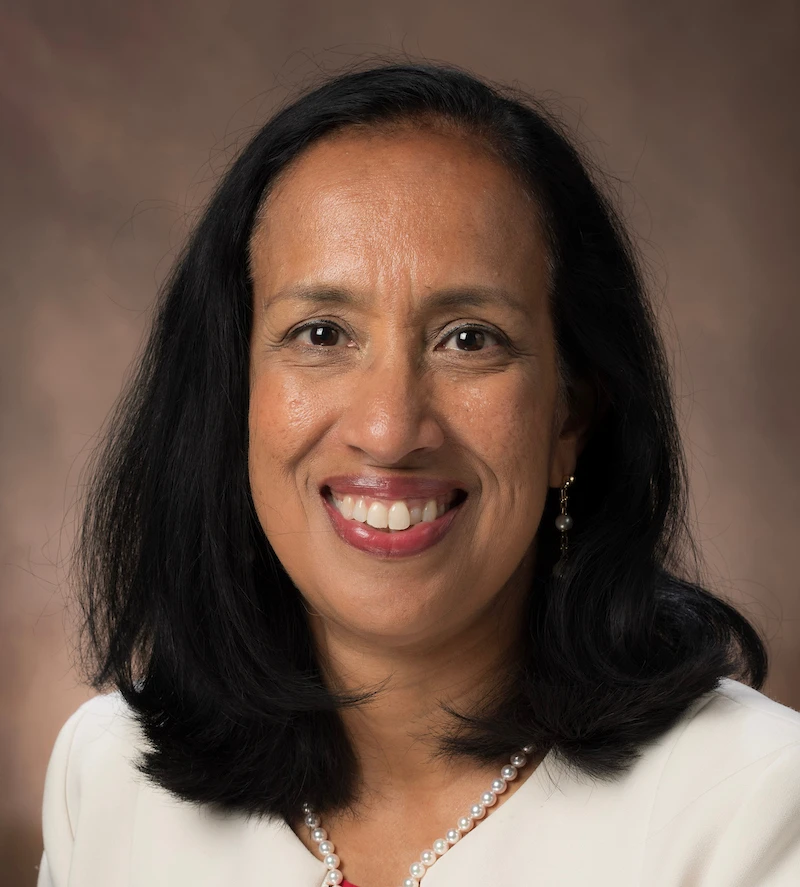
Through this Ph.D. program, we are empowering students to shape the future of technology in fields like cybersecurity, artificial intelligence, quantum computing, and applied physics.
Computer Science Ph.D. Related Careers
The Ph.D. in Computer Science at Miami University is structured not only to train students for academic positions using Miami’s teacher-scholar model, but also for industry and non-profit roles.
Computer and Information Research Scientists
Conduct research into fundamental computer and information science as theorists, designers, or inventors. Develop solutions to problems in the field of computer hardware and software.
View Career DetailsSoftware Developers
Research, design, and develop computer and network software or specialized utility programs. Analyze user needs and develop software solutions, applying principles and techniques of computer science, engineering, and mathematical analysis. Update software or enhance existing software capabilities. May work with computer hardware engineers to integrate hardware and software systems, and develop specifications and performance requirements. May maintain databases within an application area, working individually or coordinating database development as part of a team.
View Career DetailsData Scientists
Develop and implement a set of techniques or analytics applications to transform raw data into meaningful information using data-oriented programming languages and visualization software. Apply data mining, data modeling, natural language processing, and machine learning to extract and analyze information from large structured and unstructured datasets. Visualize, interpret, and report data findings. May create dynamic data reports.
View Career DetailsPhysicists
Conduct research into physical phenomena, develop theories on the basis of observation and experiments, and devise methods to apply physical laws and theories.
View Career DetailsComputer Science Teachers, Postsecondary
Teach courses in computer science. May specialize in a field of computer science, such as the design and function of computers or operations and research analysis. Includes both teachers primarily engaged in teaching and those who do a combination of teaching and research.
View Career DetailsAdditional Opportunities

Teacher-Scholar Model
Ph.D. students in Computer Science complete a Teaching Development course that blends research-based pedagogy with AI tools for grading, feedback, and adaptive learning—while exploring innovative, evidence-based approaches to teaching computer science.

Innovation and Entrepreneurship
A co-curricular experience, supported by Miami’s top-ranked entrepreneurship program, empowers Ph.D. students to drive innovation, translate research into real-world impact, and lead in emerging technology fields.

Computing Resources
The program is strengthened by a Cleveland Clinic partnership in quantum computing, a $494K NSF-funded Talon GPU cluster, and access to the Ohio Supercomputer Center—offering Ph.D. students robust computing power and opportunities for advanced research.
Improving the Future of Global Society
The overarching objective of the Ph.D. in Computer Science program is to equip and empower students to use their knowledge and skills with integrity and compassion to improve the future of our global society. For this reason, all Ph.D. dissertations in Computer Science will be required to demonstrate broader impact in serving a societal need.

Admission and Funding
This is Where Your Journey to Miami University Begins Explore what it means to be a graduate student at Miami University, where students prepare to go anywhere and everywhere. We’ll be here to help every step of the way as you prepare for college admission, enrollment, and success.
Contact Us
Graduate Admission
513-529-GRAD (4723)
College of Engineering and Computing
Marnie M. Saunders
Benton Hall 205B
Oxford, OH 45056